

A small home behind your house could give a parent a place to live nearby, make room for an adult child, or potentially bring in long-term rental income. If you own a home in Marlboro, you may now have a way to explore that idea.
The Town of Marlboro adopted a law allowing detached accessory dwelling units (ADUs) on qualifying single-family properties in January 2026. The law is in effect, but it does not mean every homeowner can build a second dwelling. Zoning, lot size, utilities, parking, and permits all matter.
Here is what the town’s current rules say.
What is a detached ADU?
A detached ADU is a separate, self-contained dwelling on the same lot as a primary home. Under Marlborough’s law, you may propose new construction or conversion of an existing detached structure. A garage or other outbuilding might be a starting point, but it must meet the requirements for a legal dwelling. An attached addition or basement apartment is not the type of ADU this law authorizes. Source: Town zoning code, § 155-32.6
Which Marlboro properties may qualify?
The town permits one detached ADU with one single-family home on a single lot in these zoning districts:
-
R-1 and R-Ag-1: Detached ADUs are permitted as an accessory use, subject to the law’s other requirements.
-
R: The property must be served by both town water and town sewer, in addition to meeting the other requirements.
The lot must also meet the minimum acreage required for its zoning district. A parcel’s Marlboro mailing address, a large backyard, or an existing outbuilding cannot establish eligibility on its own. Properties with two-family or multifamily dwellings, vacant lots, and properties used for commercial or industrial purposes are excluded under this ADU provision. Source: Town zoning code, § 155-32.6
How big can the ADU be?
A detached ADU must generally be at least 400 and no more than 900 square feet of gross floor area, with a maximum of two bedrooms. The code allows an owner to request a variance from the 900-square-foot maximum in certain circumstances involving the lot shape or a structure being converted. A variance must be granted; it is not an automatic exception.
The ADU must have its own cooking and sleeping facilities. The property must also provide two additional off-street parking spaces, beyond the spaces otherwise required for the main house. Source: Town zoning code, § 155-32.6
Can you rent out the ADU?
The law requires the property owner to use either the main house or the detached ADU as their primary residence. That leaves the possibility of renting the other unit to a long-term tenant, subject to the applicable requirements. It does not allow an owner to live elsewhere and rent out both homes under this ADU provision.
The detached ADU cannot be used as a short-term rental or bed-and-breakfast. So if your plan depends on Airbnb-style bookings, this law does not provide a path for that use. Source: Town zoning code, § 155-32.6
What about a well and septic system?
Do not assume that being outside the town water and sewer system automatically rules out a property in R-1 or R-Ag-1. The town’s law calls for Ulster County Department of Health certification that the water supply and sewage disposal facilities are adequate for the projected number of residents. Whether an existing well and septic system can support a particular plan is a property-specific question.
In the R district, the law separately requires town water and town sewer. Confirm your zoning district before spending money on designs or a rental-income projection. Source: Town zoning code, § 155-32.6
Where should you start?
Before hiring a contractor or assuming an existing building can be converted, contact the Town of Marlborough Building Department with your property address or tax parcel number. Ask:
-
What is my zoning district, and does my lot meet its minimum acreage requirement?
-
Does my proposed location meet the applicable setback and other district rules?
-
Can I provide the required additional parking?
-
What must I submit to establish adequate water and sewage capacity?
-
What permits, inspections, and certificate of occupancy will this specific project require?
The town’s code requires compliance with applicable building and fire safety codes. An ADU cannot be occupied before a certificate of occupancy is issued where required, and the Code Enforcement Officer must inspect the site before issuing one. Source: Town zoning code, § 155-32.6
What could this mean when buying or selling?
A properly approved detached dwelling could be useful to a buyer who needs family space or wants to explore long-term rental income. That does not mean every ADU adds a set dollar amount to a home’s value. Construction cost, legal status, condition, rental potential, and comparable sales all affect how buyers and appraisers may view it.
If a Marlboro listing advertises an “in-law cottage,” “guest house,” or converted garage, ask for the permits and certificate of occupancy. A listing description does not establish that the space is approved as a dwelling.
The takeaway: Marlborough has a real ADU law, and some Marlboro homeowners may be able to use it. The first step is checking the specific property, not estimating the rent from a backyard cottage that has not yet been approved.
Could an ADU make sense for your Marlboro property? Tell me a little about your property here, and I’ll help you think through the real estate side and the questions to bring to the town. Prefer to talk? Call or text me at (845) 409-1121. No pressure, just a clear place to start.
Robert Brestovansky | Hudson Valley Home Base | eXp Realty
Primary source: Town of Marlborough Code § 155-32.6, Detached accessory dwelling units on single-family properties.
FROM OUR BLOG
New Paltz Good Cause Eviction Law.
New Paltz Good Cause Eviction Law: What Landlords, Tenants and Buyers Need to Know in 2026 By Robert Brestovansky | Hudson Valley Home Base If you own a rental property in the Town of New Paltz, or you are thinking about buying one, there is a local change you should know about. The Town of New Palt
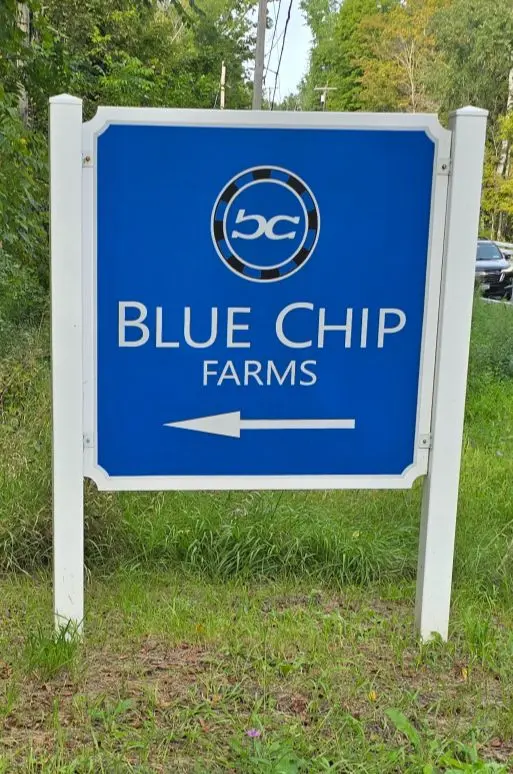
Blue Chip Farms Development in Wallkill: A New Chapter for Our Community?
Blue Chip Farms has been part of Wallkill’s identity for more than half a century. Established in 1969, the nationally recognized horse farm has helped define the open landscape and agricultural character surrounding Hoagerburgh Road. Now, a proposed development involving new homes, resort cottages,
Wallkill NY Real Estate Market Update: July 2026
If you live in Wallkill, or you're thinking about buying a home here, you've probably heard a lot of conflicting things about the real estate market. Prices are up. Inventory is up. Interest rates are still affecting buyers. Some homes are selling quickly, while others are sitting. So what's actuall